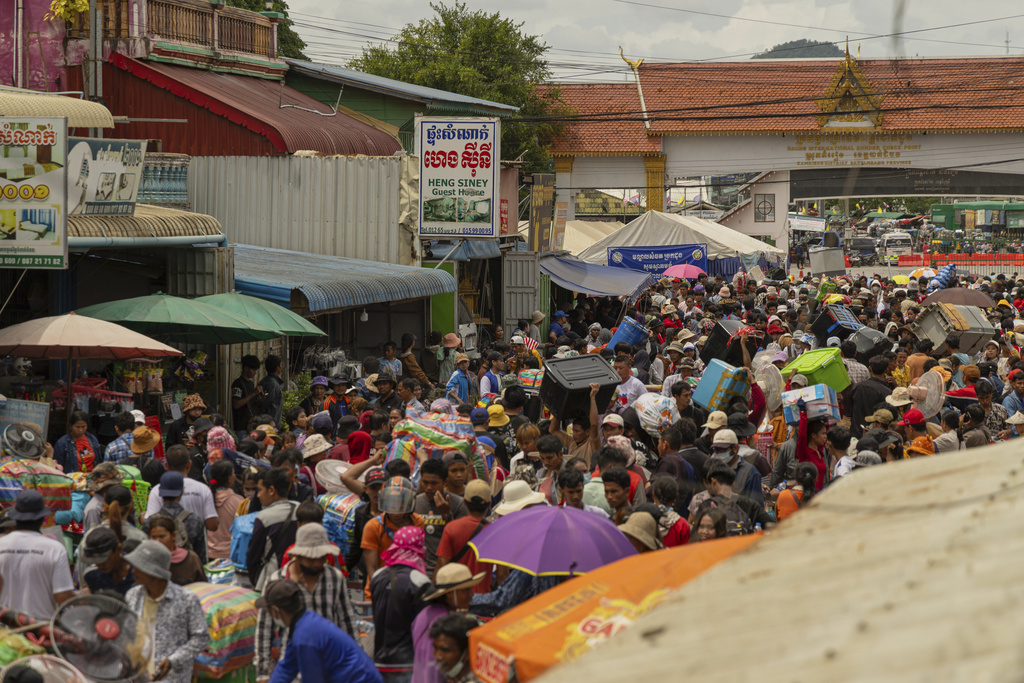
KAMRIENG, Cambodia — Tens of thousands of Cambodian migrant workers are leaving Thailand as border clashes between the two nations raise concerns about safety and stability. The movement follows a fragile ceasefire that has temporarily paused fighting but left uncertainty hanging over those who once relied on Thai jobs to support their families.
The armed conflict, which flared in July over disputed land along the 800-kilometer border, resulted in at least 43 deaths and the displacement of more than 260,000 people in both countries. Malaysia brokered the current truce with backing from the United States and China, but underlying territorial disputes remain unresolved.

For many migrants, the decision to leave Thailand was prompted by both fear of renewed fighting and economic insecurity. Kri Phart, a 56-year-old poultry worker, said he acted after reading a Facebook message from Cambodian Prime Minister Hun Manet urging nationals to return home. “I didn’t want to be the last Cambodian migrant in Thailand,” he said, describing how he joined a steady stream of workers carrying household goods across the Daung International Border Gate in oppressive heat.
According to Cambodia’s Ministry of Labor and Vocational Training, approximately 1.2 million Cambodians were working in Thailand before tensions escalated in June. The ministry estimates that about 65% — or 780,000 — have now returned. Officials have stated that returning workers can find comparable employment in Cambodia, though many remain skeptical about wages and job availability.

Some departures were influenced by unverified claims, including rumors of land confiscation for those who stayed in Thailand. Others cited reports of harassment and minor conflicts with Thai locals. For workers like Thouk Houy, 26, who supported her parents with earnings from a leather factory near Bangkok, the loss of income poses immediate hardship. “It’s my responsibility to support my parents. I don’t know how I can do that now,” she said.
The economic consequences are significant. Migrant workers in Thailand send home nearly $3 billion in remittances each year, according to government figures. Labor experts warn that the sudden drop in income will leave many families struggling with debt repayments. Nathan Green, a geography professor at the National University of Singapore, said the situation illustrates the vulnerability of migrant livelihoods during political instability.
Advocacy groups, including the Khmer Movement for Democracy, have urged the Cambodian government to introduce emergency measures such as loan repayment deferrals and hiring incentives for returning workers. Without such interventions, they warn, rural households could face severe financial strain.
Many of those returning are uncertain about the future. Meng Yeam, a former factory manager in Chonburi Province, said that while his family will manage, their savings will shrink. “Cambodia and Thailand need each other to do well,” he said. “I hope we can work in Thailand again one day, but for now, no one knows when that will be possible.”